
Animal Feed: What the DGCCRF Investigation Reveals About Claims and Labelling, and How to Secure Them
October 26, 2026
Originally published on LinkedIn (October 2026) and expanded for the website
In February 2026, the DGCCRF (the French authority for competition, consumer affairs and fraud control) published the results of its investigation into animal feed labelling. Conducted in 2023, it covered 315 operators: compound feed manufacturers, new players in the sector, wholesalers and retailers. The products inspected were intended for both companion animals and livestock, including horses.
Of the 107 products analysed in the laboratory, 31 showed a non-conformity, nearly one in three. Beyond the figures, this investigation shows how much the communication surrounding a product, on the label as well as on a website or a trade show stand, engages the company’s regulatory responsibility.
What the investigation reveals
The non-conformities identified concern product safety less than the gap between what is claimed and what is demonstrated. A few concrete examples from the investigation:
- Prohibited or unsubstantiated claims. Therapeutic claims were identified on several occasions. Such a claim is never trivial: it can lead to the product being requalified as a veterinary medicinal product, with all the requirements that entails.
- Verifiable statements… that turned out to be false. Dog kibble labelled as “gluten-free” contained gluten. A manufacturer of feed for laying hens highlighted green electricity and a reduced carbon footprint, although its green electricity contracts had not been renewed and its sourcing had not changed in some twenty years.
- Imprecise regulatory terminology. “Food supplement” used instead of “complementary feed”, or claims close to the wording reserved for dietetic feed (particular nutritional purposes) without the associated mandatory statements.
- Communication beyond the label. A fine of €1,863 was imposed on an operator distributing horse treats at an international equestrian competition: its website presented the flavourings as natural, which laboratory analyses contradicted.
- Composition discrepancies. 30% of the livestock feed analysed showed non-conformities. For example a 67% vitamin A deficit compared with the guaranteed value was observed and then sanctioned by a fine of €4,490.
In total, the investigation led to 84 warnings, 58 injunctions, 4 criminal reports and 3 administrative fines. The DGCCRF notes that most operators subsequently brought their products into compliance.
New market entrants: particularly exposed
The investigation devotes a specific section to new players in the pet food market. Their positioning often relies on differentiation: “tailor-made” nutrition, “grain-free” or “additive-free” products, or products presented as “healthier”. These arguments echo owners’ concerns about their own diet.
The issue is not the marketing argument itself, but its substantiation. The investigation identified several situations:
- False or scientifically unsubstantiated claims;
- Recipes presented as personalised based on a questionnaire, when the same recipe was used for both puppies and adult dogs;
- Characteristics highlighted as distinctive when all products on the market share them;
- CBD-based products marketed without the required authorisation.
Online sales account for a large share of the issues: nearly 20 injunctions concerned websites selling dog and cat food.
These errors do not always stem from an intent to mislead. More often, they reflect an insufficient grasp of the boundaries between product categories, and a marketing strategy built without the regulatory requirements being identified upstream. The DGCCRF observes this among established players too: marketing arguments developed on dedicated websites, sometimes without consulting the production units.
Which approach to take?
A product’s qualification determines what can be said and written about it: on the label, on the website, on a trade show stand, and even orally when talking with a professional. You can only claim what is proven and compliant with the applicable regulations. The right approach, however, depends on your situation.
New entrant or new product: build the regulatory strategy alongside the marketing strategy
The right time to secure a claim is before writing it. From the start of the project, it is useful to begin with what the company wants to be able to claim in order to stand out, and then to check:
- What the product’s qualification is, and whether each intended claim remains compatible with it;
- What evidence is needed to support each claim (analyses, scientific data, trials);
- Which regulatory terms must be used on the label and in communication;
- how the marketing, production and quality teams stay aligned over time.
This approach does not hold back marketing creativity. On the contrary: a formalised regulatory strategy makes it possible to build a differentiating positioning that holds over time, to prioritise the studies that will provide real arguments, and to avoid having to withdraw a message after launch. Well built, it becomes genuine support for the market entry strategy.
Established company: verify the compliance of what is already on the market
A product marketed for years is not immune. Communication channels evolve (new website, social media, trade shows), formulations change, suppliers too, and regulatory requirements evolve. Every change should be subject to an impact assessment.
A periodic review of labelling and communication materials makes it possible to detect gaps before an inspection, to check that guaranteed values match the actual product, and to ensure that commercial arguments remain justifiable. What is at stake goes beyond the risk of sanctions: a claim withdrawn following an injunction can lastingly undermine the trust of customers and prescribers.
In both cases, the key is to act before being forced to by an inspection, an audit or a complaint. The earlier the process starts, the less it costs. To quickly assess where you stand, the 10 questions to assess your compliance level, designed for the equine sector, apply broadly to any animal health product.
→ Are you launching an animal health product or would you like to verify the compliance of your existing materials? A One Health Compliance Project Audit reviews your labelling and communication materials in light of your product’s qualification, identifies the gaps and the claims to secure, and provides you with an operational, prioritised action plan.
Sandra Dejean, PharmD – Founder of One Health Compliance
References:
- DGCCRF. Aliments pour animaux : les mentions sur l’étiquette ne sont pas toujours vraies [Animal feed: label statements are not always true]. February 2026. Available at: https://www.economie.gouv.fr/dgccrf/laction-de-la-dgccrf/les-enquetes-et-les-controles/aliments-pour-animaux-les-mentions-sur-letiquette-ne-sont-pas-toujours-vraies
- Dejean S. Regulatory Strategy for Equine Products: 10 Questions to Assess Your Compliance Level. One Feed, August 2026: https://onehealthcompliance.com/en/onefeed/expertise-en/regulatory-strategy-equine-products-10-questions/
- Dejean S. LinkedIn post on the DGCCRF investigation, October 2026: https://lnkd.in/p/erZhA6eQ.
- Regulation (EC) No 178/2002 laying down the general principles and requirements of food law. Available at: http://data.europa.eu/eli/reg/2002/178/oj.
- Regulation (EC) No 767/2009 on the placing on the market and use of feed. Available at: http://data.europa.eu/eli/reg/2009/767/oj.
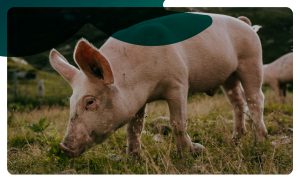
- © Mathias Grischott on Unsplash : https://unsplash.com/fr/photos/un-petit-cochon-debout-au-sommet-dun-champ-verdoyant-nG_Y_TG3O-w
To go further
-
-
 Read more
September 17, 2026
Securing a Startup's Regulatory Strategy During a Funding Round Before Investor Discussions